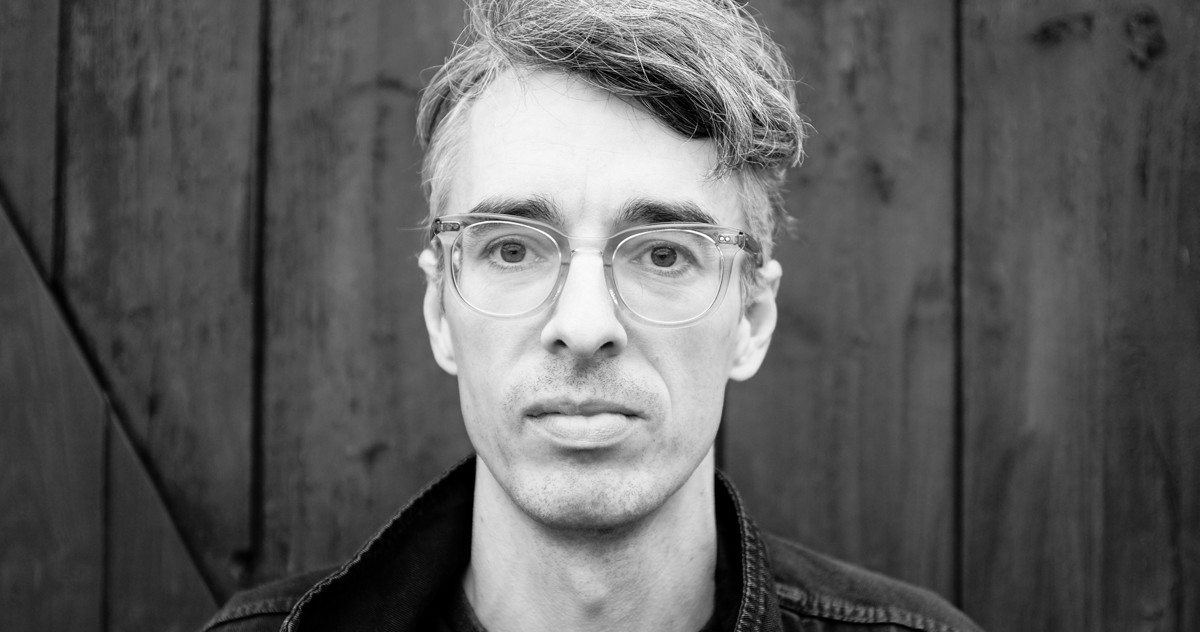
A conversation with Dean of The Academy of Subcultural Understanding, Dr Martin Fuller, on subculture, the door, and the sociology of collective ecstasy
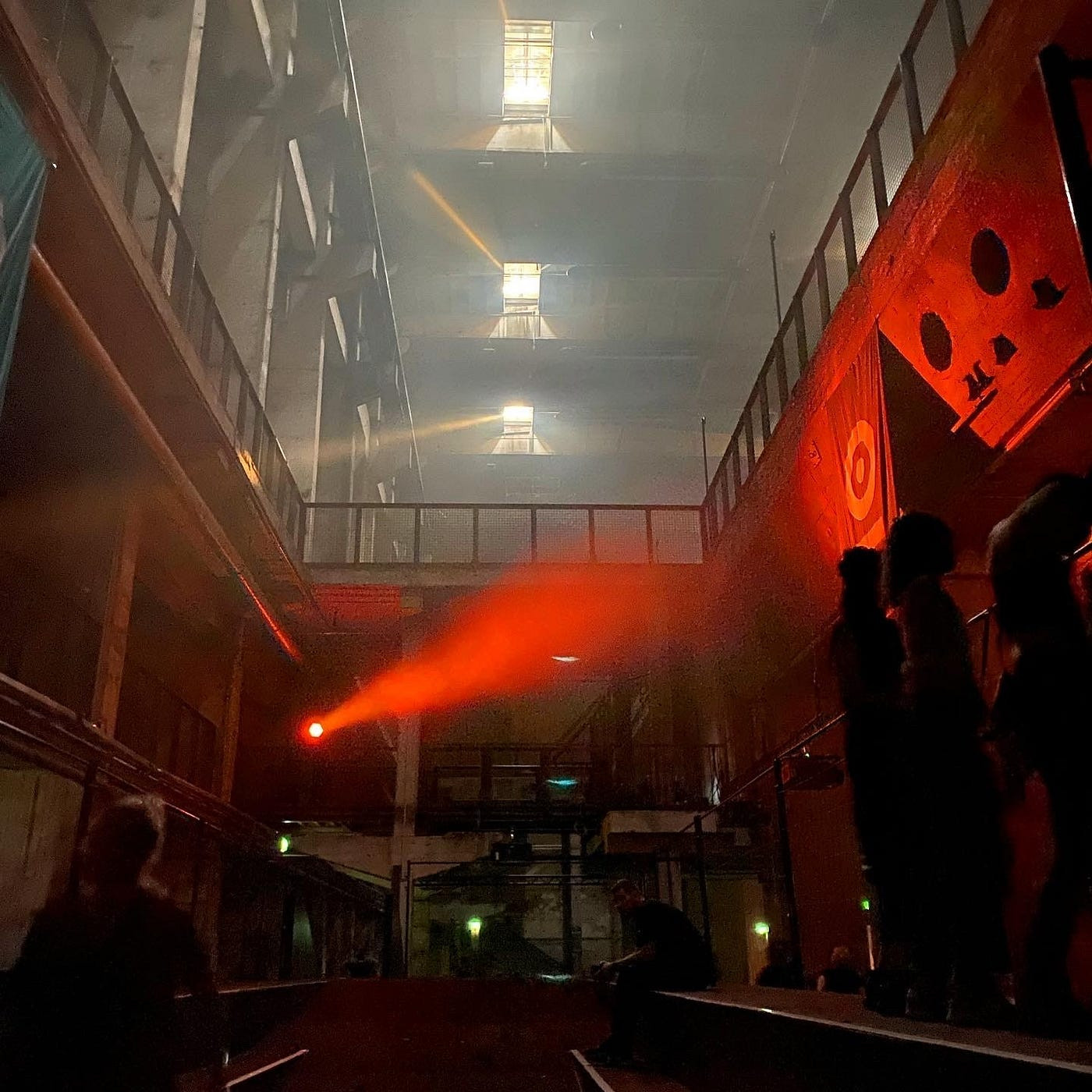
The phrase “How to Run a Club” is rarely encountered as the title of an educational syllabus. The programme bearing this name belongs to the Tresor Foundation, which is convening its fourth edition this September at Kraftwerk, the decommissioned power station the Foundation has occupied for nearly two decades. Where earlier cohorts drew on German and then European applicants, this year the doors opened to aspiring club makers from every continent, taught across three weeks of hands-on training, seminars and workshops led by the staff of Tresor and OHM. The Academy usually concentrates on people building in smaller and medium-sized cities, the second cities outside Berlin and the other established hubs. This year works differently, with a cohort drawn from Auckland, Cairo, São Paulo, Yogyakarta, Minneapolis, Tirana, Bangkok, and Shanghai. Since the first 2024 cohort, graduates have moved into leadership roles at new clubs and founded cultural spaces of their own, but the argument beneath the curriculum predates techno by a century.
None of this used to be written down. Nightlife was transmitted in person, passed from one group to another on dance floors and in back rooms of venues outside the mainstream, much like a folk tradition. This informal system functioned while cities remained affordable. As rents increased and licensing regulations intensified, spontaneity became constrained by bureaucracy. The informal apprenticeships that once produced promoters have nearly disappeared. The Academy of Subcultural Understanding, the Foundation’s educational branch, exists to carry the relics of this knowledge. Positioned at the intersection of urbanism, sociology, and culture-of-the-night, the Academy drives a programme of creative administration anchored in community, collective ecstasy, and the lost art of organic scene-building. To find out more about this most interesting initiative, I spoke with its Dean, the Canadian sociologist Dr Martin Fuller, to talk through the thinking that holds the curriculum together.
My own vocabulary for nightlife tends to lean toward “counterculture,” while the Academy’s paperwork calls it “subculture”, so I opened by asking whether Fuller draws any line between the terms. The question has a significant legacy in academic literature. Dick Hebdige read safety pins as a semiotics of refusal back in 1979. Sarah Thornton then watched as the underground turned into its own market. “Subcultural capital” served as its currency, traded through the exact media outlets it claimed to despise. Fuller doesn’t reach for them, though, and goes back further, to Raymond Williams and his 1981 book Culture, which examined the many ways people have used the word. As a result, he reads a definition as a tool a speaker picks up for a purpose, with the sociologist’s job being to watch the use. Counterculture and subculture converge for some communities and diverge for others. Fuller sees words reaching for the same quality, the presence of “independent cultural forms that are not bending to the mainstream.”
Popularity is the usual stick used to beat these kinds of places. People tell Fuller that Tresor draws tourists and has therefore forfeited its underground standing. He has little patience for the premise. Tourists are welcome in his account, and the big-city clubs treated as guardians of authenticity depend on them, with Berghain, Bassiani, Renate, and Tresor itself all relying on people passing through. What keeps subculture recognisable for him is the values embedded in it. "I don't know exactly what it is like in Bucharest, but in Vancouver, where I’m from, a mainstream club means table service, €500 bottles of champagne and very heteronormative mating rituals. That is radically different from what any of us are interested in,” he says. Thornton’s reading of the underground as a field of competition for resources strikes Fuller as a little cynical, an inheritance from the Bourdieu toolbox. The argument that subculture stops existing once it becomes somewhat popular misses what these rooms still provide as third spaces, something mainstream business has never matched. Popularity moves in cycles on the surface of a scene, and something beneath keeps its bearing through them all. He points to Detroit, where the same energy has persisted through each shift in techno’s commercial weather. “There is an independent current that continues to flow regardless of what the mainstream is doing.”
I then asked him about the great capitals of culture, as I have come to suspect that some have become caricatures of themselves: Berlin as a nightlife amusement park; New York, a branded experience of grit. In each case, the visitor consumes a city’s image, and the changing, organic culture underneath goes unmet. Stagnant even. Coming to Bucharest after Amsterdam personally sharpened this point. In my observation, that nightlife capital had reached a ceiling wherein creativity was expected to conform to that specifically Dutch approach to creativity refined over many years. In contrast, Bucharest’s potential reads as more like an open canvas, its post-minimal brand not yet consolidated. That said, this city’s resulting risk is a quieter one: that a handful of people assemble a Bucharest identity from borrowed fragments of other capitals, and the result never grows from its own soil.
Fuller recognised the syndrome and refers to the concept of the city as an entertainment machine, Terry Nichols Clark’s term for the way municipalities turn culture into a growth strategy. A concept expanded on by Richard Lloyd as “neo-bohemia”. The comfort he takes from that research concerns location. Branding operates on the periphery of what people are truly doing, and the founders of real spaces rarely think about the campaign running overhead.
His deeper diagnosis specific to Berlin is economic. He landed when the city was cheap enough that nobody expected you to work, when a party could begin in an unclaimed room and keep going until the room gave out. “You might decide to organise a party at the weekend without first deliberately applying for permits. You simply began using a space and discovered how long it would last,” Fuller remembers. “Sometimes it lasted ten years. Now every decision has to be deliberate.” In this age, that deliberateness reaches all the way into who moves there. “Now I often meet people who say they moved to Berlin for work, which was almost unheard of before… There is a difference between trying to achieve a life where you work as few hours as possible so you can pursue other things, versus having to free up time to have fun after working and hustling all day.” Once spontaneity requires an application form or rule book, the informal apprenticeship through which club knowledge once travelled disintegrates.
The most serious answer to the question of why the Academy exists points away from Berlin entirely. An hour from the capital, the far-right vote share approaches 50 per cent in some districts. Fuller has worked in these regions, including a youth project in Prenzlau, and describes teenagers whose available worlds narrow to the households of radicalised parents and the organised networks that recruit the bored. He lands on the image of a room where a Syrian refugee, the child of an AfD voter, and a Ukrainian end up on the same floor without either one planning it that way. The outcome he wants is people staying and choosing to "build something and create a third space for others," something sociologist Ray Oldenburg had already given a name decades earlier, somewhere that isn't home and isn't work. The importance of these spaces is clear: “Such places can help deradicalise people from difficult backgrounds and provide safer environments,” says Fuller. The founding task of the Academy, therefore, was to "support the people who are already there and want to give young people something to do." Admissions turns that into a selection process, weighing need against merit. Asked what he looks for in an application, he kept his answer short. "We look for the people who will benefit most from the support."
Community is the word that inevitably turns up whenever the Academy gets written about, and it is also the one I trust least. The industrial co-option of it is hard to stomach, and the people who lean on it most often are the gatekeepers, defending their own definition to keep their place inside it. I asked Fuller whether community can survive inside an industry built to exclude. He agrees that the term gets used carelessly, sometimes to manipulate people outright. His response is to name actual independent places, such as Mensch Meier and Jonny Knüppel, where “it is counterintuitive to capitalist logic to undertake many of these projects. You can only do it if you care about community.” Proof enough: temporary-use projects where the people running them just would not let the thing die. “Corporate interests have co-opted it. But their co-option does not make the actual communities less real or less necessary. When these communities disappear, people experience harm,” he says. “Somebody else’s abuse of a concept should not lessen our experience of the thing itself.” He cites the passage of Ostgut into Berghain, a space that held its gay identity even as it opened to a wider public.
The theme that most divided us was safety, and I told him so directly. What troubles me now is the question of who is permitted to be safe. In modern vernacular, with every instance of inclusion comes a subtler power to exclude, even where care is the intention. A group of Muslim men or an open Palestinian activist, for example, can be read very differently within safe-space discourse than others are. These conditions were witnessed first-hand at renowned venues across the world. Hence, the safety a venue extends starts to track the wider governmental organisation of society.
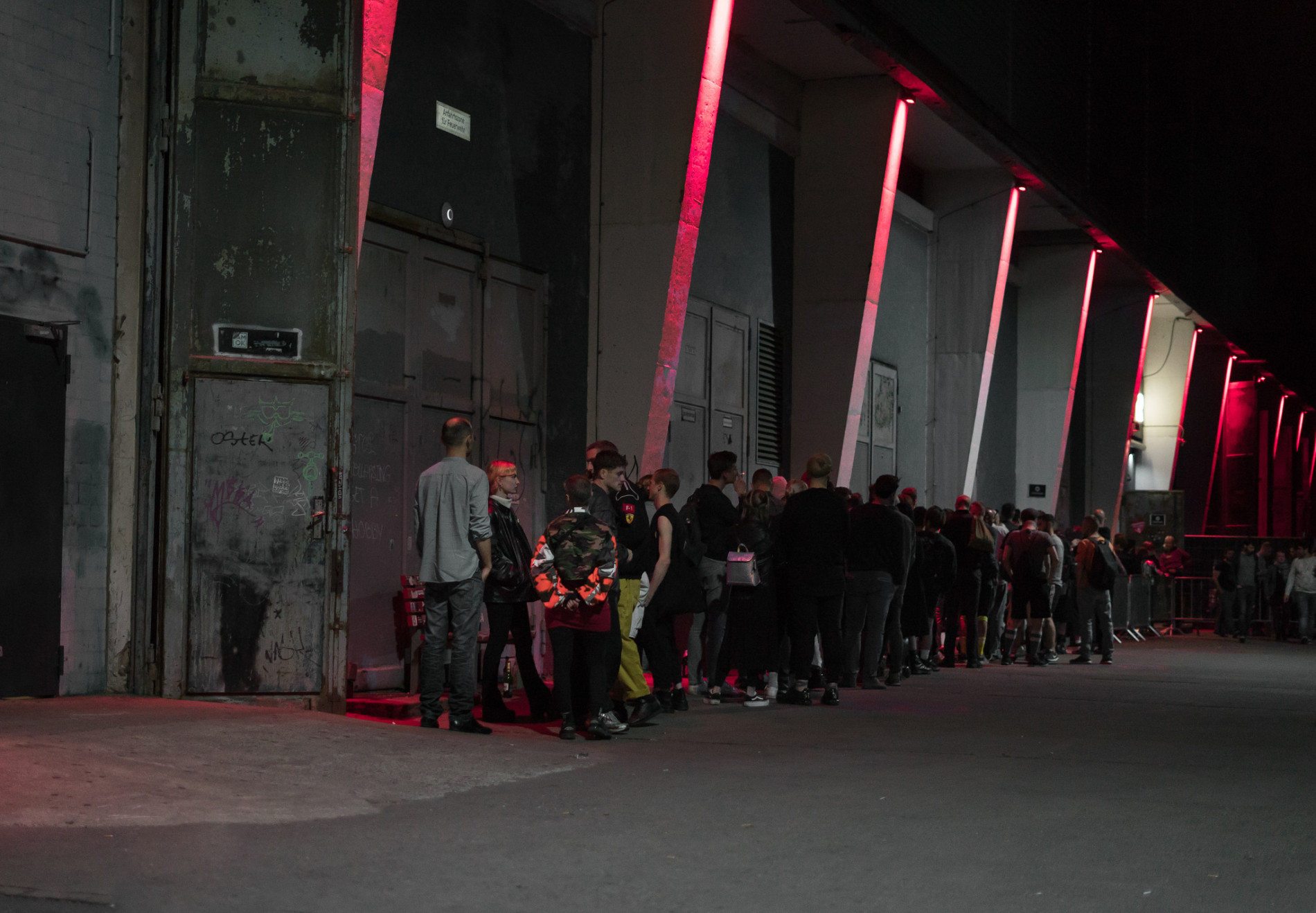
I have always been sceptical of door policy for a related reason, since a door is exclusionary by its very design. How does a space stay open and safe while still refusing to reproduce the exclusions of the world beyond its threshold? Fuller treats the point at which a space states its values. In a smaller city, or one with an extremism problem, the community a club claims to represent should be legible in the people controlling access. A white-supremacist man grows comfortable when a large, tough white man holds the door and reconsiders the moment a person of color or a trans person holds it instead. “The experience of safety and care that you want inside should already be visible at the entrance,” he says. Entrances should explain themselves. For example, staff might tell a rejected group that its presence changes the balance of the dance floor, and invite them to come differently next time. In the small city, where the people refused will return, the refusal has to teach them something in the meantime.
I ended where Fuller’s scholarship begins, with collective ecstasy and the temporary loss of the individual inside a group. The frame he brings to the Academy is what he calls the “sociology of pleasure,” built on a thesis that "collective experiences of pleasure are important for society, individuals and cities". In The Elementary Forms of Religious Life, Émile Durkheim described the effervescence of the group, the current of collective feeling through which a collective conscience forms, generated whenever people gather as one body and fix their attention on something beyond the single self. In Fuller’s account, the club is one of the few catalysts for transcendence a secular city still owns.
This is also where the phone becomes a problem. When I described my observation of the local nightlife as an outsider as a collection of fragmented individuals, Fuller connected the fragmentation to what people call TikTok techno, though he waved off the debate over the genre itself. The trouble is the posture. A raver filming the room for a social media platform has moved beyond the collective experience, reducing it to an individual projection to be consumed elsewhere. Against that, he sets the room designed to dissolve the self. “Clubs should be otherworldly and affective,” he says, and the aesthetic he prizes follows from the theory. “A dirty club with unfinished walls feels as though it is unfolding and becoming throughout the night. The room feels different at one in the morning than it does at four.” Fuller insists that care and transcendence can occupy the same safe space that, in his phrase, “can still be sublime.” What such a night produces outlasts it. “Anyone who has had one of those extraordinary nights recognises the feeling of coming out the other side with something changed in their relationship to the world.”
That is the actual wager. The city stopped teaching these lessons on its own, and the places that need cultural space most rarely have the resources to build it unaided. The informal city can't raise the next generation of rooms by accident anymore. Somebody has to take up the teaching on purpose. Maybe that somebody is you.
