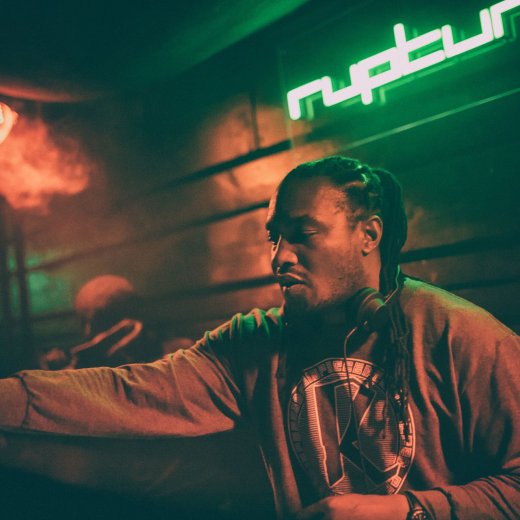
If you want to trace the bloodline of UK bass culture, from blues dances and sound clashes to jungle, dubstep and the 2010s warehouse revival, follow the Channel One Sound System story. Run by selector Michael “Mikey Dread” Letts, this London institution stands as both keeper of the roots and a ritual for the community. Think hand-built speaker boxes, an analog signal path, single-deck discipline, and message music that treats the dance like public service. On September 27, 2025, Mikey Dread and MC Macky Banton lead Channel One across six Riddim Bandits scoops as Black Rhino Residency launches its 2025 run at Control Club in proper style.

The Channel One story begins in 1979, when Mikey and his brother Trevor “Jah T” took over their father’s rig and named it after Kingston’s Channel One studio. In the early years, they loaded vans with boxes, played at West London blues parties and community halls, then toured student unions across the UK, bringing dub to rooms that had never booked a sound before. In 1983, they made the decisive move with a first set at Notting Hill Carnival. They have returned every year since, turning that corner of Leamington Road into an annual gathering for roots music and collective release. The crowd grew from a few dozen locals to a sea of thousands, while the format stayed true, foundation vocals rolling into heavyweight versions, reasonings on the mic, flags draped over the scoops.
Channel One’s operating method is traditional by design. Mikey plays vinyl on a single turntable. Tunes run in full, with time to flip to the dub, and space for echo, spring reverb and siren to work as atmosphere. At the center sits a custom preamp the crew calls the brain, handling EQ, crossover and effects without clutter. The system is hand-built, with classic valve and analog amplification feeding 18-inch bass scoops and custom mid-tops that prioritize clarity and presence. You feel the sub rattling in your chest, yet you still hear the skank, the horns and the lyrics. The result is a pacing and tone that are measured, ceremonial and human.
The crew rotates around a steady core. The frontline dialogue pairs Mikey’s crate with a number of voices. In recent seasons, Macky Banton and Ras Sherby often take the mic, with Ramon Judah appearing on selected dates.This tight-knit family model creates a circle of voices around one sound. The delivery stays consistent, conscious reggae, exclusive dubplates and uplifting steppers, mixed to keep the floor moving while the message lands. Their dub box is the stuff of legend, one-off specials voiced across generations, pulled as crowd lifters in the dance and as steel when clash time comes. Alongside the dubplate chest, the crew has issued select sides on their own imprint, including Robert Dallas cuts like ‘Visions,’ with engineering credits circulating from the wider sound-system community.
Those weapons had a historic stage at Red Bull Culture Clash. In 2010, up against Metalheadz, Skream and Benga, and Soul Jazz, Channel One took the title with composure. Two years later, they wheeled the setup into Wembley Arena to face Major Lazer, Annie Mac’s crew and Boy Better Know, the first reggae sound system to reportedly command that stage. The clashes amplified what the Carnival crowd already knew, broadcasting roots authority to a generation raised on bass mutations.

That visibility helped secure Arts Council support for a set of bridge tours. Dub to Dubstep in 2009 placed Kromestar, RSD and Jazzsteppa alongside classic roots. Dub to Jungle in 2011 linked with Congo Natty, Tenor Fly, Nanci and Phoebe, and Klose One. The Jamaica 50 celebrations in 2012 featured Mala and Coki, Shy FX, The Bug with Flowdan, and The Heatwave. In the mid-2010s, they paired sessions with live roots from the Twinkle Brothers, band and sound on the same night. These projects showed how UK bass culture grew from sound system logic, versioning, dubplate exclusivity, MC craft, and a shared obsession with sub-frequencies as social glue.
Beyond Carnival, a long-running residency at Village Underground distills the west-side street ritual into brick-vault marathons of roots and steppers on a system tuned for warmth. Clips from those nights traveled widely, not because of novelty drops, but because the footage reads like a lesson in dynamics and trust. A monthly show on Gilles Peterson’s Worldwide FM carries that mentorship to a global headphone audience, preserving the long-form arc of a Channel One session for posterity.
The technique may be old-school, yet the politics remain present. The mission is to break down barriers via reggae music. Sets are deliberately message-led, with songs about liberation, dignity and everyday righteousness. The crew avoids divisive or hateful lyrics, the mic stresses peace and unity, and the dance welcomes elders and first-timers alike. In London, a city that often monetizes culture while policing it out of public space, Channel One’s Carnival corner still feels like a covenant of Black British and Caribbean history honored in the open air.
Although a sound system lives mainly in the present tense, Channel One has begun to fix parts of its legacy on record. Mad Professor Meets Channel One Sound System in 2016 and the follow-up in 2023 translated their dub sensibility into Ariwa’s psychedelic space. In 2023, Down in the Dub Vaults let Mikey Dread assemble a double album of Channel One staples and their version counterparts with Channel One-stamped dubplates finally pressed for wider ears. Limited, collector-grade twelves on their own imprint spotlight allies such as Danny Red and Ras Sherby. Broadcasts, including a 2024 KEXP session, carry the control-tower telepathy into the studio without sanding its edges.
After campus circuits and early European tours in the 1980s and 1990s, Channel One carried boxes to Italy, France and Germany, then to Australia, New Zealand, and Turkey. In recent years, they added the Americas and East Asia. In some cities, crews literally built systems to host them, then kept those rigs running after the visit. Over time, the effect compounds a global network of rooms and rigs, where operators often cite their first real lesson in tuning and pacing at a Channel One session.
The influence is easiest to see in genres that grew under reggae’s shadow. Jungle and drum and bass picked up dubplate culture and MC energy. Dubstep elevated the drop as a version of the classic dub reveal. Grime borrowed the cypher and the clash. Channel One set the seabed that allowed these genres to form. By holding to first principles, an analog signal path, musical mids and tops, and lyrics you can hear and understand, they gave successive generations a reference point.
In an era saturated with DSP loudness and algorithmic taste, Channel One’s refusal to rush is radical. The single turntable insists on attention, the analog chain softens the edges, and the curation trusts the intelligence of the floor. The dance becomes a shared tempo. That is why parents bring kids to the Carnival rail, why Village Underground sells out on a Sunday, and why those clips travel internationally. Four and a half decades in, the name Channel One still signals that the music will be truth and the sound clean and heavy. Come as you are, listen hard, move together, leave lighter.